The August sky has a special date in store. On Wednesday 12 August 2026, a solar eclipse will take place that will be visible from much of Spain and, in Vejer de la Frontera, will be seen as a partial eclipse.
According to data from Spain’s Instituto Geográfico Nacional, the eclipse in Vejer will begin shortly before 7.44 pm and reach its maximum at around 8.39 pm, when the Sun will already be very low on the horizon. For this reason, rather than simply looking for higher ground, it will be especially important to find a spot with the clearest possible view towards the west.
There are several places in and around Vejer with wide-open views to the west that could be particularly interesting for watching the eclipse.
El Poniente, Vejer
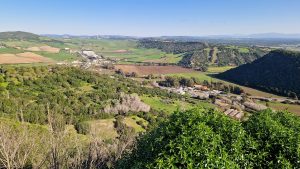
If you would prefer to stay in Vejer, El Poniente is one of the most interesting options. Located in an elevated part of the town, it offers sweeping views towards the coast, with El Palmar, Conil, La Muela and Patría on the horizon.
Its west-facing position and expansive views make it a good place to consider for watching the eclipse, which will take place when the Sun is already very low on the horizon.
Mirador del Santo
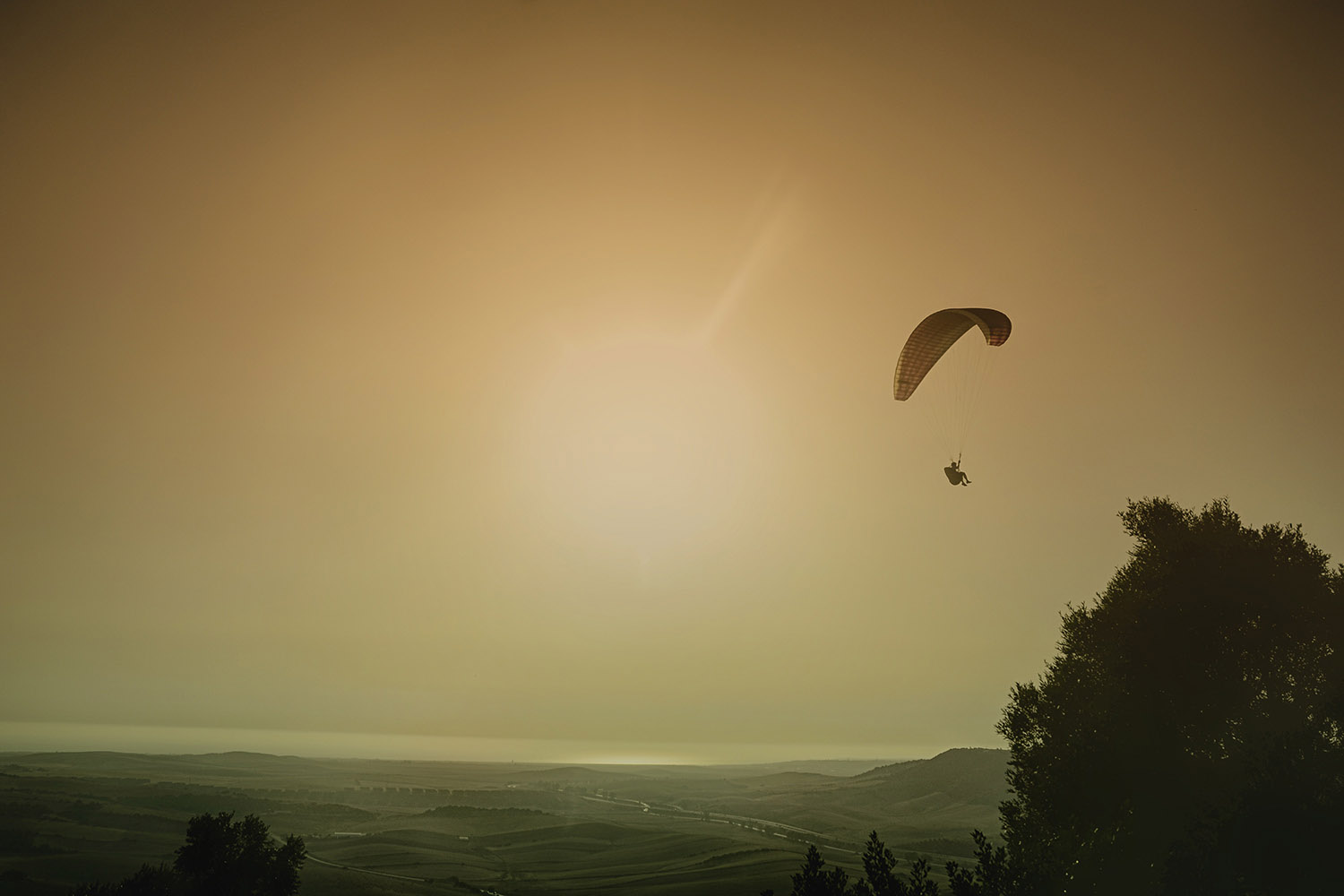
Located at one of the highest points in Vejer, Mirador del Santo offers a sweeping panorama of the town and its surroundings. From here you can see the historic centre, La Muela, Santa Lucía and, towards the coast, El Palmar and Conil.
Thanks to its far-reaching views, it is another place worth considering for watching the eclipse, always choosing a position with an unobstructed view towards the western horizon. As with the other locations, bear in mind that there may be a large number of visitors and always respect designated access points and permitted areas.
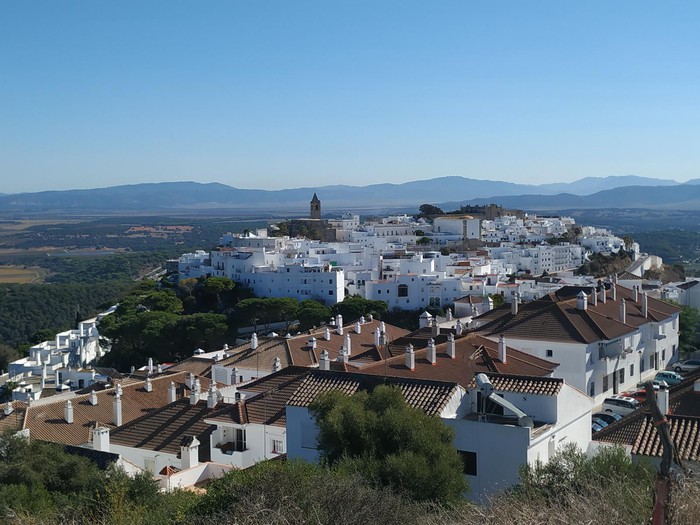
El Palmar Beach
If there is one place accustomed to watching the Sun disappear below the horizon, it is El Palmar.
Just a few kilometres from Vejer, its long stretch of beach and open Atlantic horizon normally offer particularly wide views towards the west. Vejer’s own tourism information highlights El Palmar for its sunsets and its proximity to the town.
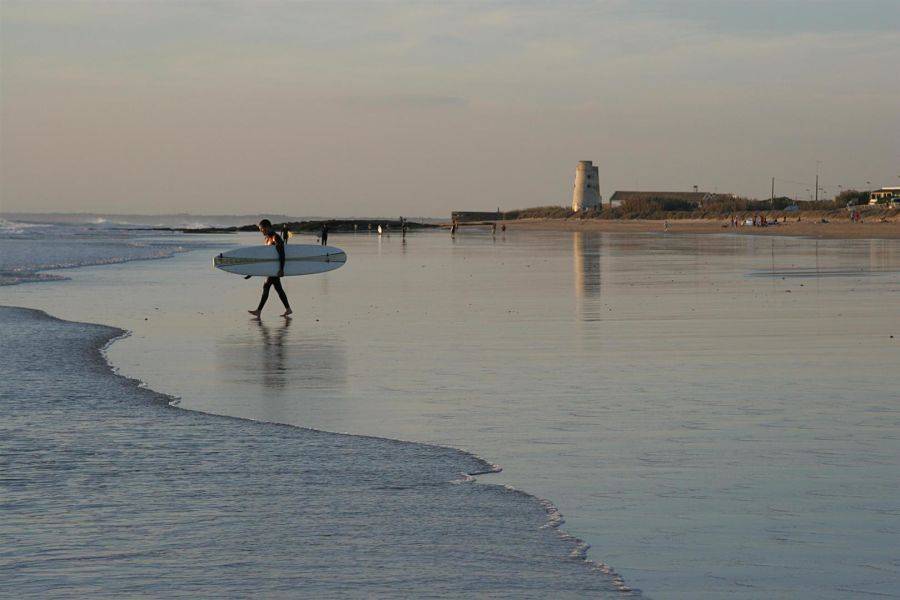
For the eclipse, the recommendation is to use only designated public access points and areas, and to avoid dunes or other environmentally sensitive spaces.
Cape Trafalgar and Los Caños de Meca
A little further south lies one of the most recognisable landscapes on the Cádiz coast: Cape Trafalgar. Its open position facing the ocean regularly makes it an exceptional setting for sunsets. Barbate Tourism specifically highlights the sunsets along this stretch of coastline.
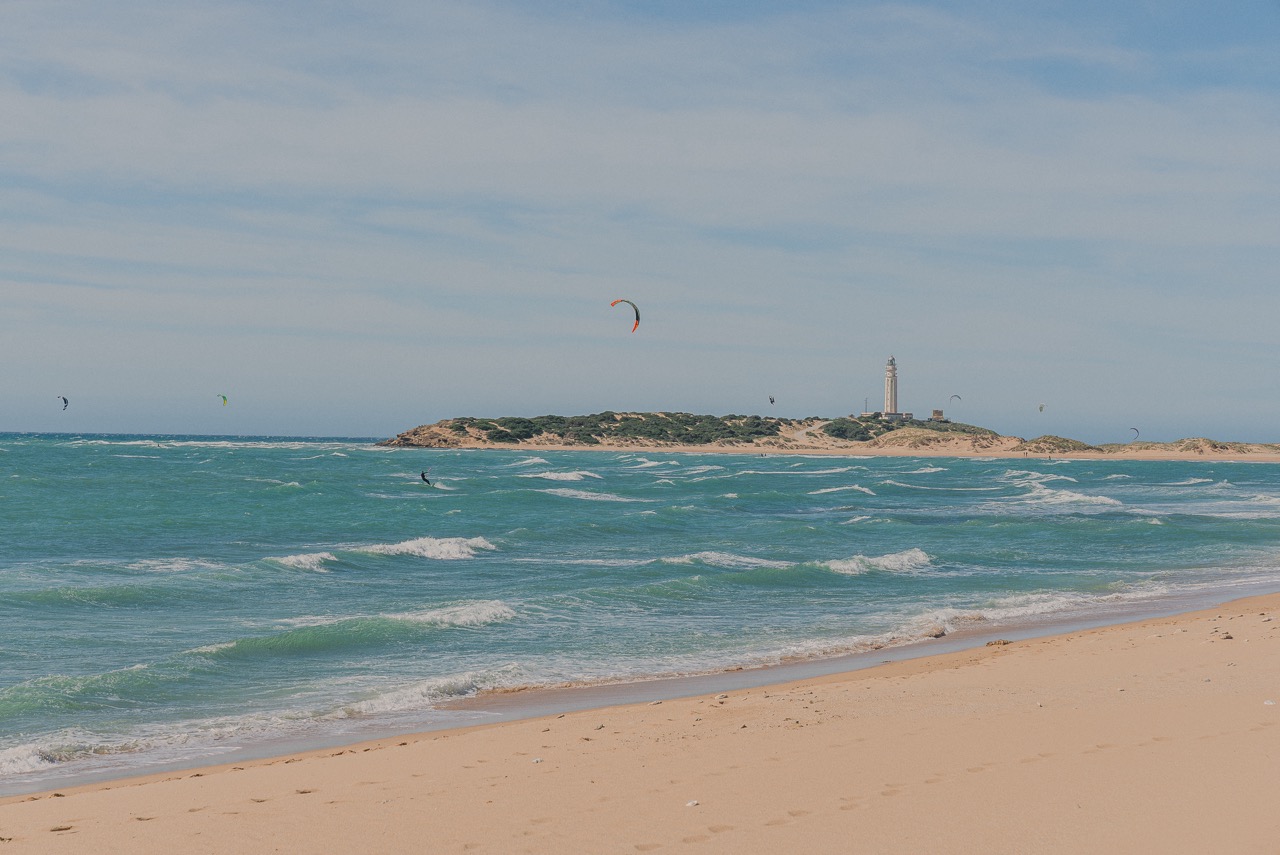
Particular care should be taken here. The Trafalgar tombolo is associated with protected natural areas, so any visit should be made exclusively through permitted zones, respecting any signs, guidance or access restrictions that may be in place.
Zahora Beach
Very close to Trafalgar, Zahora offers another alternative. It is a wide beach with views towards Cape Trafalgar and a very open sea horizon.
It can be a good option for those already staying in this part of the coast, although it is worth bearing in mind that visitor numbers, traffic and access conditions may vary considerably during an event of this kind.

A few tips before looking up at the sky
Whichever location you choose, one recommendation is more important than any other: you should never look directly at the eclipse without appropriate eye protection.
Spain’s Civil Protection authorities recommend using only eclipse glasses certified to ISO 12312-2, checking that the filters are in good condition and never using ordinary sunglasses or improvised filters.
Cameras, binoculars and telescopes should also never be used to look directly at the Sun unless they are fitted with appropriate solar filters.
Visitors are also advised to avoid unnecessary journeys, use only permitted access areas, never stop on road shoulders or enter private land, and take particular care in natural areas, especially because of the risk of wildfires at this time of year.
The places included in this guide are not official eclipse-viewing sites, but locations known for their views and sunsets. Weather conditions, visitor numbers or instructions issued by the authorities may affect the experience, so we recommend checking the latest official information before setting off.
After that, all that remains is to look up, wearing the right eclipse glasses. Vejer and the Cádiz coast already know how to put on a memorable sunset. The one on 12 August promises to be something rather different.