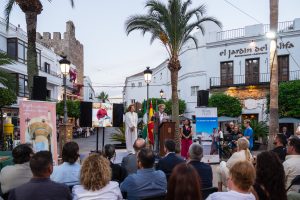
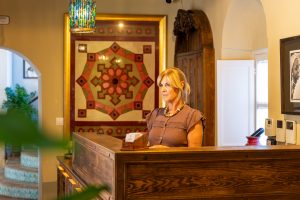
There is a particular morning each year when Madreselva feels different. This morning, while enjoying a coffee in our tropical courtyard, was one of those.
There’s a movement, a flicker of light, a sharp, short tweet. A sound just sharp enough to catch your attention and then vanish. And then you see them – the swallows have returned.
They arrive without announcement, as they always have. One day the sky above the garden is empty; the next it is stitched with their fast, precise flight. They cut through the air like ink strokes, looping between the palms, skimming the surface of the pool, darting into the zaguáns as if they had never left.
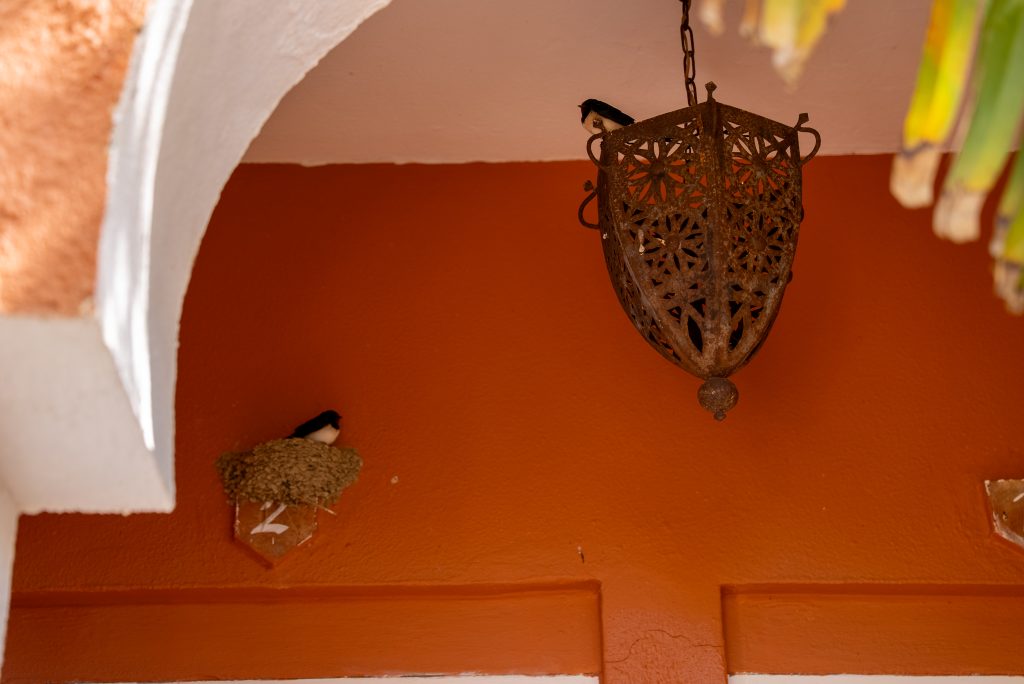
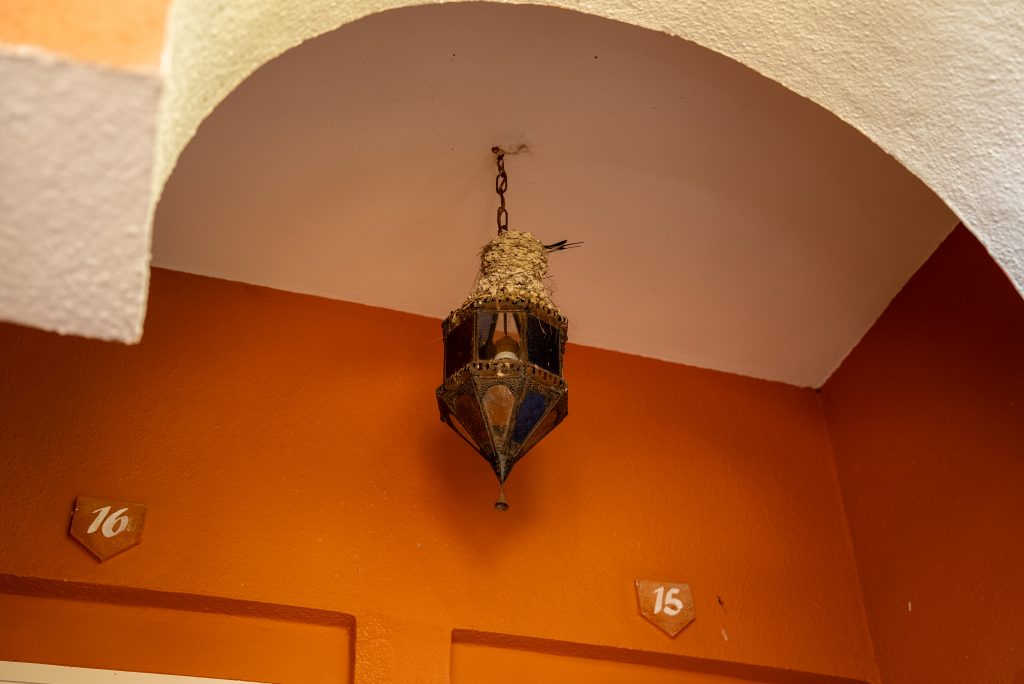
Our rooms, built around our large planted courtyard, offer something that is increasingly rare: shelter. The swallows (golondrinas in Spanish) sit on the smallest of ledges in quiet corners protected from wind and disturbance. They also love our lamps. Each room at Madreselva carries its own character – a different hanging light in its entrance, chosen carefully, often handcrafted, sometimes Moroccan, sometimes Andalusian. To the swallows, they are home.
They circle them first, always the same ritual. A quick inspection in flight, a return pass, a brief landing. Heads tilting. Wings flicking. A conversation, perhaps, between partners. And then, if approved, the work begins. Threadlike fibres gathered from the garden, from nearby fields, from the edges of the road. Mud, straw, and feathers are the foundations of their little homes. They return not just to the hotel, but often to the exact same spot.
The same lamp or the same little ledge. The Room 2 number tile is always a favourite.
In this part of southern Spain, on the Costa de la Luz, where North Africa is almost always on our horizon, the arrival of swallows marks the end of winter and the beginning of spring. For millennia, their return has signalled the turning of the season. Farmers watch for them as a sign of warmer days ahead, of insects returning to the air, of life beginning again after the stillness of winter. Sailors see them as a promise of land nearby. These small birds cross continents. Many of the swallows that arrive here have wintered in sub-Saharan Africa, travelling thousands of kilometres to return, with unerring precision, to the same corners of the same buildings in the same villages.
At the Madreselva, their presence changes the atmosphere in ways that are hard to describe but easy to feel. The mornings become more animated. You hear them before you see them – a soft, constant chatter, a language of quick notes and sharp turns. Guests sitting with a coffee under the pergola find themselves looking up more often, following the arcs of flight.
There is a particular delight when the chicks arrive. At first, just silence from the nest. Then, suddenly, small open beaks appearing at the rim – impossibly wide and very hungry. The parents work tirelessly, sweeping through the air to catch insects, returning again and again in a rhythm that feels almost mechanical but is entirely instinctive.
The presence of our tiny friends is not something we take lightly. Across Spain – indeed across much of Europe – swallows are under pressure. Modern construction has reduced the number of suitable nesting spaces. Smooth façades, sealed roofs and sterile materials leave little room for the small imperfections and ledges they rely on. Widespread pesticide use has reduced the insect populations they depend on and can also harm the birds themselves when they ingest contaminated prey.
In Spain, as in much of Europe, it is illegal to destroy their nests while they are in use. More importantly, there is a growing recognition that we have a responsibility to coexist – to adapt our spaces in ways that allow other species to continue theirs. So, despite the extra clearing up we have to do, we protect our swallows and their nests.
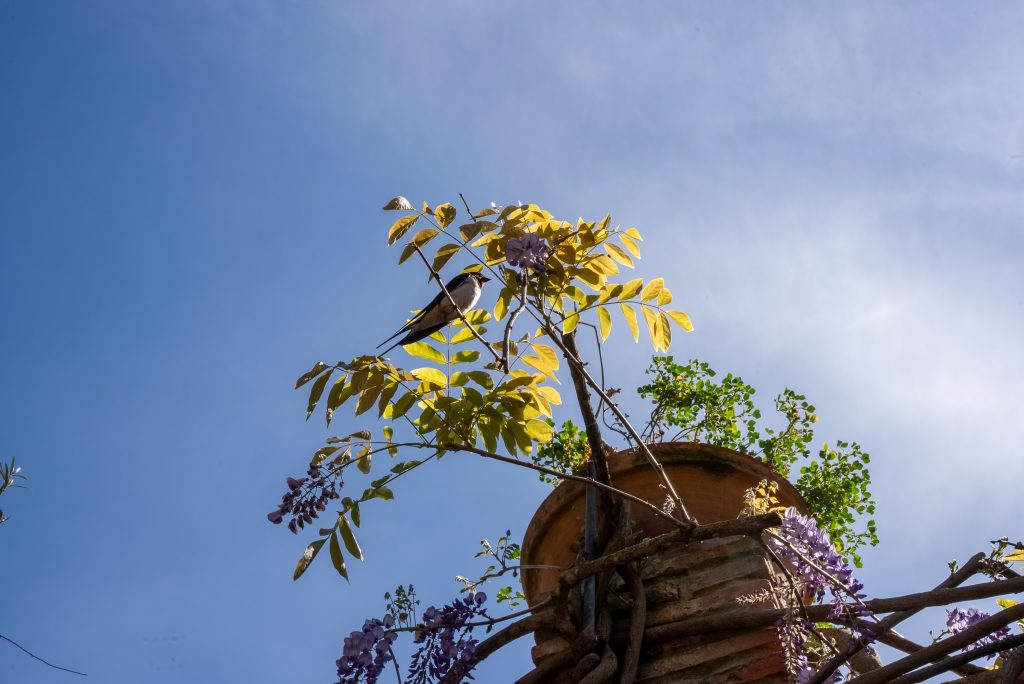
We have no grand ecological programme; it is simply a way of paying attention to the natural environment around us. Guests often leave with a memory of our swallows – a child watching the nest each morning, or a couple noticing the same pair returning each evening. A moment of stillness broken by a sudden sweep of wings. Small things that make a stay with us more memorable.
So each year, when we see that first flicker in the sky above Madreselva, we pause and reflect. We have done just a little to make a home for these birds after their long journey – a home they will return to year after year.